
Insertional Achilles tendonitis (tendinopathy) – Causes and best treatments

Insertional Achilles tendonitis (tendinopathy) is one of the most common causes of pain in the back of the heel. Learn why you get it, what treatments are useful, which ones you should best avoid, and what to do if you have a related condition like heel bursitis or a bone spur.
Remember, if you need help with an Achilles injury, you're welcome to consult one of our physio team via video call.

The terms tendinitis, tendonitis, tendinosis, and tendinopathy mean the same thing for all practical purposes, and we use these interchangeably in most of our articles.
In this article:
Treatments that might help for specific cases of insertional Achilles tendonitis
What if I have insertional Achilles tendonitis and bursitis?
What if I have insertional Achilles tendonitis and calcifications or a bone spur?
What if I have insertional Achilles tendonitis and a tear in the same area?
What if I have insertional and mid-portion Achilles tendonitis in the same tendon?
This article contains affiliate links. We might earn a small commission on sales at no extra cost to you.
What is insertional Achilles tendonitis or tendinopathy?
Your Achilles pain is likely due to insertional Achilles tendonitis or tendinopathy if the injured area is located in the bottom 2 cm of the Achilles tendon – near or at the point where the tendon inserts into your heel bone.
It is often also called Achilles enthesitis or enthesopathy, because the point where a tendon attaches into a bone is known as the enthesis.
It’s quite common for insertional Achilles tendonitis to occur together with other injuries or structural changes, e.g. heel bursitis, calcifications, bony spurs, or Haglund’s deformity. We’ll look at how these might influence your treatment later in this article.

What insertional Achilles tendonitis feels like
As explained above, the defining symptom that sets it apart from mid-portion or high Achilles tendonitis is that the main pain is located right at the bottom of the Achilles tendon (last 2 cm) where it attaches into the heel bone.
We have had patients who were unfortunate enough to have insertional and mid-portion tendonitis at the same time – we’ll cover what to do in this case later in this article. It is also quite common to get it in both heels simultaneously.
The pain usually starts gradually, or you might only become aware of it several hours after you’ve done an activity, e.g. you’ve been very busy all day in the garden and house, sat still to rest for a few hours, and then notice your heel is sore when you get up and move about again.

With insertional Achilles tendonitis, you might also experience the following:
You might notice some mild swelling in the affected area.
It is often very uncomfortable to start walking on it when you’ve been sitting still for a while or sleeping, but then it warms up and becomes more comfortable after a few steps. Here's a detailed explanation of why this happens.
Gentle movement and activity often makes it feel better, but if you walk very long distances or spend a lot of time on your feet, it will likely increase your pain.
Calf and Achilles stretches might feel good while you’re doing them, but then causes your pain to flare up in the hours after you’ve done them (more on this later).
If your tendon is just a bit irritated, it might only feel uncomfortable at the start of a run or other activity, and then the pain will likely ease off and go away only to return (often feeling much worse) several hours later.
If you try to ignore the pain and just carry on with your life and activities as normal, it often becomes so painful that you can do less and less before triggering the pain.
Sitting in positions where the back of your heel is resting on a hard surface can often increase your pain because it presses directly on the injured area (same as when it hurts when you press on a bruise).
👉 No two cases of insertional Achilles tendonitis ever feel 100% the same – you might not experience all of these symptoms.
Signs that your pain might be caused by something else 🧐:
If your pain started suddenly (e.g. you felt something go, or a sudden sharp pain, or you tripped over something), you might actually have torn your Achilles tendon in that area, and it’s best to get it checked by a doctor sooner rather than later.
Similarly, if you notice a bruise, it’s best to speak to your doctor, because Achilles tendonitis does not cause bruises – a bruise means something might have torn.
If the area is very swollen or puffy looking, you might have heel bursitis, either as the main injury or in addition to tendonitis.
If the area is very red, hot to touch, or throbbing, it’s usually a sign that something in there is inflamed – this can signal that you have a very inflamed bursa, inflammatory arthritis, or calcific tendonitis.
Numbness or tingling in the heel usually points to a nerve being irritated. This can mean that your pain is actually coming from your lower back (L5 nerve), but it might also just be that the small nerve that runs in that area (the sural nerve) is a bit irritated. A physiotherapist can easily check this out by getting you to do movement tests.

An experienced physiotherapist can test for and diagnose your heel pain without the need for scans. However, if they are unsure or suspect that you might have torn your tendon, getting an ultrasound or MRI scan done can be useful to help figure out what is going on.
What causes insertional Achilles tendonitis?
The most common reasons for getting insertional Achilles tendonitis:
Overuse – this is the most common cause and happens when you do more of a specific activity than what your tendon is used to, overwhelming and injuring it (I’ll explain this in more detail below).
You have an inflammatory condition (like gout, psoriasis, rheumatoid arthritis, or spondyloarthritis) that is causing a flare-up in your tendon – it’s worth getting this checked as a possible cause if you have a close family member who has been diagnosed with any of these conditions.
Some medications, like fluoroquinolone antibiotics, can cause tendon injuries
A direct hit on your Achilles tendon (e.g. someone bumps into you with a shopping trolley or hits you with a hockey stick) can cause tendonitis.
💡 Most cases of insertional Achilles tendonitis or tendinopathy are caused by working the tendon a lot harder than what it was ready for in a specific position or with a certain activity.
Why the Achilles might become overworked
The lower part of your Achilles tendon has to deal with two types of force (or workload) when you move:
A pulling (or tensile) force – this is created when the calf muscles pull on the Achilles tendon to lift your heel up.
A compression force – this is created when your Achilles tendon is pulled tightly over the heel bone when you bend your ankle so that your toes move closer to your shin (dorsiflexion).

Your Achilles tendon can usually handle these types of work, and normally it doesn’t cause any problems.
It’s only when you suddenly do a lot more of it that your tendon might get overworked and injured; similar to how various parts of your body might get injured if you suddenly run a marathon when you’ve been doing only short jogs around the park – it simply wasn’t prepared for it.
Our bodies are really good at adapting and strengthening as long as you allow it enough time to do so between bouts of activity.
Whenever we do a physical activity (walking, gardening, exercise, etc.), our bodies sustain micro-injuries in the parts we use. This is quite normal; these small injuries act as a trigger or message to your body that those areas should become stronger.

Your body then uses the period after the activity to repair the micro-injuries and makes those tissues even stronger than before.
👍 If you allow enough time for this full process to happen, you grow stronger over time and find that you can do more or heavier work before getting tired.
👎 It’s when you either do an activity that is simply too much for your tendon’s current strength or don’t allow this recovery process to fully complete and continuously train or repeat the activity before you’ve fully recovered that these micro-injuries might accumulate and cause Achilles tendonitis.

Examples of everyday activities that might cause insertional Achilles tendonitis if you ramp them up too quickly:
Suddenly switching to walking long distances in flat footwear (e.g. wearing flip-flops on holiday) when you’re used to wearing shoes with a slight heel – your Achilles tendon has to work harder in the flatter shoes, and your foot also moves into more dorsiflexion, which increases the compression of the tendon against the heel bone.
Doing lots of strong calf and Achilles stretches that cause the lower part of the Achilles to compress strongly against the heel bone.
Deciding you want to get fit and going from not really doing much to doing long or brisk walks several days in a row.
Or starting activities that involve a lot more running and jumping than what you’ve been doing, and instead of easing into them, ramping them up quite quickly.
Adding in a lot more high-intensity training sessions (e.g. hill running, sprints, jumping) and not allowing enough recovery time after sessions.
Contributing factors
If you have a really high foot arch or a Haglund’s deformity, the shape of your bones might cause your lower Achilles to press much more strongly against the heel bone when you do dorsiflexion stretches, which means it’s easier to get insertional Achilles tendonitis when you do activities that suddenly increase the workload on that area.

Women in any stage of the menopause might find that theirs are more easily injured because the reduction in oestrogen means that your body takes a bit longer to produce and repair collagen (the main building material of tendons).
Best treatments for insertional Achilles tendonitis
👉 If you suspect that you have an inflammatory condition that is contributing to your Achilles pain, the first step should be to consult your doctor for some blood tests and medication. You can read more about that here.
The advice that follows forms the two main pillars of treatment for Achilles tendonitis:
reduce the strain on the tendon to a level that allows the pain to calm down and healing to take place,
while slowly restoring its strength and ability to do the activities you want to be doing.
💡 The easiest way to reduce the strain on the lower part of the Achilles tendon is to reduce the amount of dorsiflexion your ankle goes into throughout the day – the aim is not to eliminate it completely, just to reduce it a bit.
Pick good shoes
Avoid walking barefoot or wearing flat, unsupportive shoes like sandals or flip-flops. Instead, look for a shoe that:
has a heel that is slightly higher than the front of the foot (around 10 mm / 0.4 inch usually works well),
and that doesn’t feel like it’s pressing directly on the injured area.

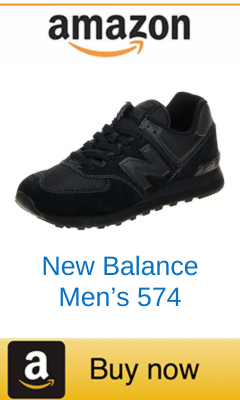
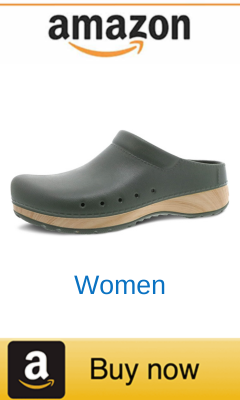
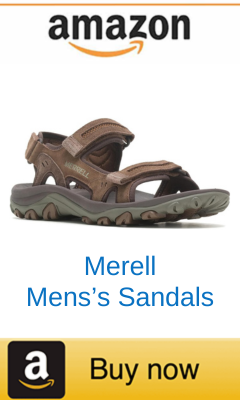
Here are some examples of footwear that work well for insertional Achilles tendonitis:
Running shoes / trainers / sneakers


Clogs – great if your heel does not like pressure on the back
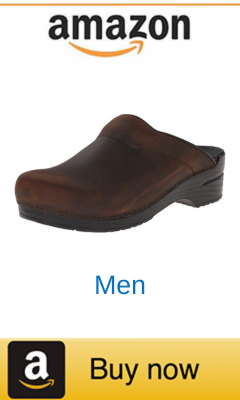
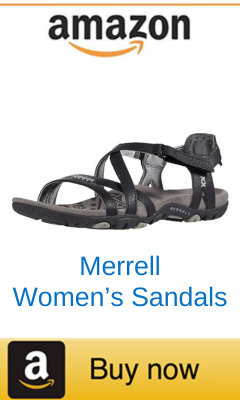
Sandals

Heel lifting shoe inserts
You don’t necessarily have to buy new shoes – simply putting some heel lifting inserts into your shoes might be enough to reduce the strain on the Achilles:
Use them in both shoes to keep things balanced.
Use only the minimum amount of lift that helps your pain feel better when you walk.
Some patients find that they have to combine heeled shoes and small heel lifts to get the optimal lift for them.
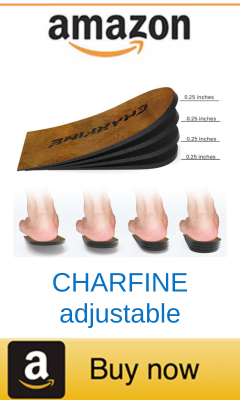

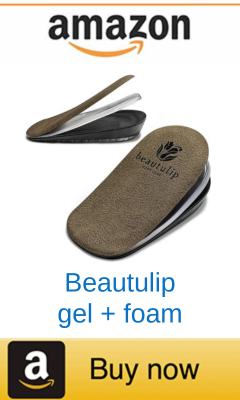

These footwear and shoe inserts are temporary measures. We often get our patients to start doing their rehab exercises in their shoes and with heel lifts, and then slowly reduce the amount of lift as their tendon recovers and starts to tolerate more compression.
The end goal is to get you walking comfortably in any type of shoe, as well as barefoot, but this can take a few months.
Use the concept of “relative rest” to your advantage
Even with the perfect shoe and insole combination, your tendon will likely still not be happy with unlimited walking or sport. So, to allow it to properly calm down and recover, you have to adapt or reduce your activities to a level that doesn’t increase your pain significantly.
It’s normal to feel mild discomfort in your tendon when you move and use your legs, and the research shows that it helps recovery if you remain active (so, don’t rest completely) as long as you don’t push into strong pain.

The challenge with tendonitis is that there’s often a delayed pain response; i.e. everything feels fine while you’re doing an activity, but then your pain flares up significantly several hours later, or you feel a lot more uncomfortable the next day.
Here’s how to apply the concept of relative rest. You can continue an activity (your rehab exercises – see below – as well as your usual daily activities) that meets all of the following criteria:
It doesn’t cause significant pain (more than 3 out of 10) while you’re doing it (it’s OK to be aware of the injured area, but it should not be very painful).
It doesn’t make your tendon feel significantly more painful in the hours after completing the activity or the next day.
Extra pain/discomfort (on top of what you have when you don’t do that activity) calms down back to what you normally have within 24 hours.
Our patients often report that, when their rehab exercises are pitched at the correct level, they actually feel better for 24 to 48 hours after doing them.
👉 If your rehab exercises are making you feel significantly worse, you need to discuss it with your physio and get your plan adjusted.
If there’s a specific task or activity (like walking the dog or cleaning the house) that increases your pain, check whether you can change things up:
Does it make a difference if you wear the types of shoe and insole we mentioned earlier?
Does it help if you don’t do such long dog walks, stick to more even ground, or instead of walking go to a dog park and let them run around?
Instead of cleaning the house in one go, split the work into smaller jobs and rest between sessions.
Instead of walking to the shops, could you take public transport or drive?
Can you ask someone to help out, so that you don’t have to do so much?
And here's some advice if your job makes it tricky to go easy on your injured Achilles tendon.
You will get back to doing these activities, but it can help to speed up your recovery if you can temporarily adjust them to not cause significant flare-ups.


Watch how you sit
If you have a habit of resting the back of your heels on a chair or table throughout the day, that can irritate insertional tendonitis – putting pressure on something that already hurts usually just makes it hurt more.
Or if you like sliding your feet underneath your chair; that takes the ankle into a dorsiflexed position, which pulls the lower Achilles tightly over the heel bone and often causes it to flare up later or feel uncomfortable when you then get up.

Don’t do Achilles or calf stretches
If you’ve been told to do any type of exercise that takes your Achilles tendon into a strong stretch position (dorsiflexion), and you’re finding that your pain just doesn’t want to calm down, you might want to stop doing those for a while.
Those stretches can feel quite satisfying or good while you’re doing them, but then cause your pain to increase significantly several hours later.
If you’ve been doing calf stretches or exercises where you drop your heel over the side of a step, see what happens to your symptoms if you stop doing them for a few weeks.
These exercises aren’t bad as such, but they are often counterproductive during the early stages of recovery – you can usually ease back into doing them later in your rehab.

👉 If you’ve been stretching your calves because they feel tight and uncomfortable, going for a massage, getting dry needling done, or doing your own massage using a foam roller or massage gun can help.
Restore your tendon’s ability to work
The most effective way to strengthen your tendon and restore its tolerance for work is by doing specific rehab exercises. For rehab exercises to be effective, they have to:
start at a level that your tendon can currently tolerate without causing a significant increase in pain
be spaced apart far enough to allow your body to strengthen and recover fully after doing them, and
gradually progress in difficulty as you get stronger until you’ve built the strength you need to do your chosen activities pain-free.

👉 You can find a detailed explanation of what exercises work best for insertional Achilles tendonitis here.
If you’re feeling stuck and not making progress despite doing all the right things, there are other treatments (like shockwave and PRP injections) that might help. You can find a full discussion on what other treatments might help for any type of Achilles tendonitis, improve healing, or actually make things worse in this article.
Treatments that might help for specific cases of insertional Achilles tendonitis
Hormone replacement therapy (HRT) might improve healing if you’re in any stage of the menopause. Oestrogen is one of the main hormones in charge of getting your tendons to produce new and stronger collagen fibres (the main building block of a tendon). The drop in oestrogen levels due to the menopause has been shown to both cause tendonitis and delay healing.
Arch support insoles are useful for people who over-pronate.
Immobilisation in an orthopaedic boot might be useful in some cases that are super painful and do not calm down with using heel lift inserts and load management, but it should never be used for more than a few days.
Anti-inflammatory medication might be useful if you have heel bursitis, inflammatory enthesopathy, or if your tendonitis was caused by antibiotics or an inflammatory condition like gout. It is not effective for ongoing Achilles tendonitis or tendinopathy caused by overload and might interfere with your recovery if used for a long time.
Surgery might be an option in cases of Achilles tendonitis where no other treatments bring relief. It is currently advised to consider surgery only if you’ve tried a progressive rehab plan (as described above) for at least 12 months.
What if I have insertional Achilles tendonitis and bursitis?
The good news is that the exact same treatment discussed in this article will also help your bursitis to settle down. You might just want to consider adding in anti-inflammatory medication or using a topical anti-inflammatory gel to help the inflammation in the bursa to calm down quicker.
Reducing the amount of stretch and compression at your heel becomes even more important when you have heel bursitis. Your heel bursa sits between your Achilles tendon and your heel bone, and its job is to actually reduce the friction between them.

Normally, it’s quite happy to be pressed against the heel bone as your ankle moves into dorsiflexion. However, when your bursa is already inflamed and irritated, even this normal level of compression can make it much angrier.
What if I have insertional Achilles tendonitis and calcifications or a bone spur?
In this case, the answer is a bit more nuanced, because it depends on the type of calcification. You can find a detailed explanation of the various types of calcifications (bone spurs included) and how you deal with them here.
What if I have insertional Achilles tendonitis and a tear in the same area?
This is quite common in cases that have been going on for a while. We do have very detailed articles about how you treat partial Achilles tendon tears. If the tear is at the insertion, the rehab and treatment plan is very similar to what we’ve described in this article.
If it’s a small to medium tear (less than 50% of the tendon is torn) or one that runs along the length of the tendon rather than across, you can usually stay active as long as you can find a shoe with a high enough heel to allow you to walk short distances without pain.
If you have a large tear (more than 50% of the tendon is torn), you might have to wear an orthopaedic boot, with your heel positioned higher than your toes, for a few weeks before starting rehab exercises.
Once you start your rehab (regardless of the size of tear) you will usually follow the same principles discussed in this article, and it will address both injuries.
What if I have insertional and mid-portion Achilles tendonitis in the same tendon?
You have to treat it as insertional Achilles tendonitis, because this is the one that is usually the most sensitive and easiest to flare up.
You will find that both areas will improve through that treatment and then, once your tendon is ready for it, you will usually ease into rehab exercises that also include more stretch and compression and target the mid-portion of the Achilles more (i.e. doing calf raises over the side of a step).
How we can help
Need help with an Achilles or related injury? You’re welcome to consult one of the team at TMA online via video call for an assessment of your injury and a tailored treatment plan.

We're all UK Chartered Physiotherapists with Master’s Degrees related to Sports & Exercise Medicine or at least 10 years' experience in the field. All of us have a wealth of experience working with athletes across a broad variety of sports and ranging from recreationally active people to professional athletes. You can meet the team here.


About the author
Maryke Louw is a chartered physiotherapist with more than 20 years' experience and a Master’s Degree in Sports Injury Management. Follow her on LinkedIn and ResearchGate.


