
Longitudinal Achilles tendon tears – What they are and how to treat them

Updated: Aug 20
A longitudinal tear is a lesser-known type of Achilles tendon injury where the tear runs along the length of the tendon fibres rather than across them. In this article, we explain what longitudinal Achilles tears are, how they are diagnosed, and what the treatment involves – including when conservative rehabilitation is enough and when other options might be considered.
Remember, if you need help with an Achilles injury, you're welcome to consult one of our team via video call.

The terms tendinitis, tendonitis, tendinosis, and tendinopathy mean the same thing for all practical purposes, and we use these interchangeably in most of our articles.
In this article:
We've also made a video about longitudinal Achilles tendon tears:
This article contains affiliate links. We might earn a small commission on sales at no extra cost to you.
What are longitudinal Achilles tears?
A longitudinal Achilles tear is a type of partial tear that runs in the same direction as the tendon fibres, rather than across them. In the Achilles tendon, collagen fibres run from top to bottom in organised bundles. In a longitudinal tear, the gap occurs along those fibre lines.
The tear usually sits within the middle of the tendon (intra-tendinous) rather than extending out to the edges of the tendon. This differs from the more commonly discussed Achilles tears that run across the tendon fibres, which interrupt the tendon structure from side to side. This makes longitudinal tears more stable than other types of tears and a person can usually function pretty well despite having a longitudinal tear in their Achilles.

Causes of longitudinal Achilles tears
There appears to be a strong association between Achilles tendinopathy and longitudinal tears.
This does not mean that having tendinopathy makes a tear inevitable. However, people who develop a longitudinal tear often have previous tendinopathy-related tendon changes or a history of tendinopathy, even if they were not aware of it at the time.
In tendinopathy, the tendon fibres lose some of their normal organised structure. Instead of neat parallel lines, the fibres become more irregular and spaced apart. These structural changes might make it easier for a tear to develop within the tendon.
Some longitudinal tears might occur without a prior history of tendinopathy, but this appears to be less common.
The injury is often linked to a sudden overload of the tendon, such as:
a sudden increase in training load
returning to activity after a break
adding new or higher-intensity activities (e.g. sprinting instead of jogging)
doing several load-increasing activities close together.
Examples:
increasing your weekly running volume
running on consecutive days when you normally do not
standing or walking for long periods during travel or events
changing footwear from supportive shoes to flat shoes with less support.
💡 Often, several factors or events can combine to create a sudden spike in load on a tendon that might already have underlying changes.
How we diagnose longitudinal Achilles tears
People with longitudinal tears often report a history of Achilles tendinopathy symptoms before the tear occurred, such as:
stiffness when getting out of bed in the morning
pain at the start of activity, which lessens as the tendon warms up
pain later on during or after activity
symptoms that worsen over the 24 hours after an activity.
Sometimes a sharp pain occurs during a sudden overload, which may indicate the moment the tear happened. However, not everyone clearly remembers such an event.
💡 A common pattern is that the Achilles continues to function – the patient can continue doing their sport, but they cannot return to their previous highest activity level, often missing the final 10–15% of performance.
Scans
A suspected longitudinal tear can be confirmed with a scan.
Common options:
ultrasound scan
MRI scan
Ultrasound can identify longitudinal tears, but there is some suggestion in the research that MRI might detect them more reliably, because ultrasound might occasionally miss them.
However, a scan is not always essential. Treatment often follows similar principles to Achilles tendinopathy rehabilitation, so improvement with appropriate management can still occur even without a scan.
Longitudinal Achilles tear treatment
Most longitudinal tears are treated conservatively, i.e. without surgery.
The overall strategy can be divided into three overlapping stages (more about each below):
Protect the tendon and allow it to settle down.
Gradually rebuild strength and load tolerance in your Achilles tendon.
Sport-specific training.
👉 How long each of these steps takes and what exactly is needed will depend on the size of the tear and the patient’s symptoms.

How do I protect my tendon?
Longitudinal tears are actually quite stable and usually only require minor adjustments to your activities to help them settle. The amount of protection your tear requires will depend on its size and also your symptoms.
💡 The aim is to allow the patient to stay as active as possible while providing the level of protection their tendon requires.
So, let’s look at how your physio or doctor might suggest you protect your tendon and who might benefit from each type.
Do you need an orthopaedic boot?
Not all longitudinal tears need or benefit from wearing an orthopaedic boot.
🤷♀️ Why not stick everybody in a boot? Because it can lead to unnecessary loss of strength and prolong recovery if it is used in cases where it is not needed.
If you have a large longitudinal tear (> 30% of the length of your tendon), you might benefit from wearing an orthopaedic boot for up to six weeks. For smaller tears, wearing the correct shoes with heel inserts is usually the better option.
Your foot will likely be placed in a plantar flexed position (toes pointing down) inside the boot to allow the tear to easily grow together. This can be achieved by adding several heel lifting inserts (about 2 to 3 cm high) into the back of the boot, but some of the more modern boots also have adjustable hinges that allow you to reach the correct angle without heel inserts.

The angle of your foot will usually be adjusted over the six-week period (by removing the heel inserts one at a time) until you reach a fully flat foot position inside the boot.
You will likely be allowed to remove the boot during that period and do specific rehab exercises, but it is usually best to avoid strong stretches of the Achilles tendon into dorsiflexion (toes moving to shin) during that period.
👉 There is currently no evidence from the research as to what protocol is the best, so your doctor or physio might provide you with different instructions.
Heeled shoes and inserts
If your tear is smaller than 30% of the length of your tendon, wearing the right shoes might be all you need to allow the tendon to settle and recover.
When you wear shoes where the heels are higher than the front of the feet, it reduces the strain and stretch on the Achilles tendon. This also reduces the pulling on the tear and allows the fibres to grow back together.

The aim is to find the shoe and heel insert combination that allows you to walk without discomfort.
Start by finding a shoe that has a higher heel – often referred to as the heel-to-toe drop; a 10-12 mm drop usually works well.
If your symptoms reduce to a pain level of 1/10 or lower when you wear these shoes, you likely don’t need any heel inserts.
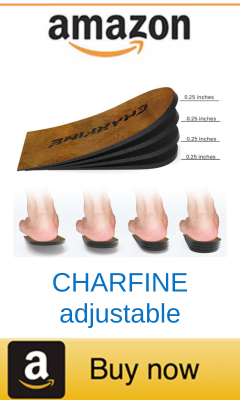
If it still feels uncomfortable to walk in your new shoes, then adding some heel wedges or inserts into your shoes usually helps (add them to both shoes to keep things equal).
This is not an exact science – if your tendon remains irritated and your symptoms do not want to settle despite having the correct shoes and heel inserts, even small tears might benefit from a period in an orthopaedic boot. But in these cases, the tendon usually only requires two weeks in the boot (as opposed to six for large tears), and one can then transition into wearing shoes with heel inserts.



Relative rest
You usually don’t have to rest your injured tendon completely, but you do have to adapt or stop the activities that irritate your tendon. We find that our patients recover much better when we can keep them active and only cut out the activities that really do affect the injury.
For example, for runners we might get them to try doing shorter runs, reduce their speed, or test what happens when they stick to flatter terrain. If adapting their running sessions doesn’t work and still irritates their injury, then we will suggest cross-training activities.
The “rule” we apply in these cases is that it is usually OK to continue with any activity that:
doesn’t cause significant discomfort while you’re doing it,
AND doesn’t cause an increase in your symptoms in the 24 hours afterwards.
It can be hard to judge what this really means in your specific case – I suggest you discuss this with your physio.


Restoring your tendon’s strength and function
I often find that people want to compartmentalise the treatment process in that they (wrongly) think you have to rest your tendon completely and only after your symptoms have completely resolved start strengthening it.
Rehab exercises should actually be started early on, because doing the correct exercises at the correct time helps speed up the recovery process. However, this does not mean that everyone should be doing the exact same exercises.
💡 The exercises you start with must match your tendon’s current strength and symptoms – this is part of what your physio should establish during your first consultation.
For example:
If someone has a large tear and wears a boot, they might start with gentle foot movements, while avoiding stretching the tendon into dorsiflexion, after about two weeks.
If someone has a small tear and can move pain-free in heeled shoes, they might immediately start with low-load calf raises on both feet while wearing their heeled shoes.
Here are some of the general rehab principles we follow:
1. Avoid strong dorsiflexion stretches (toes moving closer to shin) in the early days by:
wearing heeled shoes when doing your exercises and other activities
doing calf raises to floor level only (as opposed to over the side of a step)
avoiding deep dorsiflexion stretches, e.g. calf stretches, certain yoga positions, and deep squats.

You can usually ease back into these positions as your rehab progresses. Your physio will guide you on when it’s time to start removing your heel wedges and start working into positions that stretch the Achilles more.
2. Build strength over time and in small steps:
Start at whatever load your tendon can currently tolerate without increasing your symptoms.
Build up to whatever level is required for your specific sport or activity.
Some people might have to start with very low-load exercises, e.g. just doing calf raises while they’re sitting, without any extra weight. Others might be able to start immediately with single-leg calf raises as long as they are wearing their heeled shoes.
Every case is different, and your physio will use the information they gather from the discussion and movement tests during your consultations to establish what is right for you.

3. Sport-specific training and easing back into full sport:
The goal is to gradually return to normal activity without triggering another overload.
For some people, this might simply mean slowly increasing their walking or running. But if you do sports that involve jumping, pivoting, quick changes in direction, or strong pushing off, you will likely benefit from adding in exercises that mimic these movements, e.g. jumping and hopping.
Most people recover with this type of conservative rehabilitation.
What if I'm not making progress?
If progress stalls despite appropriate rehabilitation, other options can be considered.
One reported approach is platelet-rich plasma (PRP) injections.
PRP treatment involves:
taking some of the patient’s blood
spinning it in a centrifuge to separate out the platelet-rich plasma
injecting that plasma into the injured tendon.
The idea is that the platelets might help stimulate healing.
Evidence for this approach is limited. One case report described a patient with a 4-cm longitudinal intra-tendinous tear who experienced significant improvement after PRP treatment, with substantial improvement within one month and resolution by three months.
However, this evidence comes from a single case report.
So PRP might therefore be something to discuss with a clinician if conservative treatment has plateaued, but it cannot be considered a proven solution that will work for everyone.
Surgery for a longitudinal Achilles tear?
Surgery for this type of injury is poorly studied, and there are no studies comparing surgical outcomes with conservative rehabilitation or injection treatments.
For that reason, surgery is usually not considered the first option.
A surgical opinion might be appropriate if:
symptoms persist despite thorough conservative treatment
the tear is very large (for example, involving more than 50% of the tendon)
the patient reeds to return to a very high level of athletic performance.
In such cases, imaging results are typically reviewed by an orthopaedic surgeon, who can advise on the best course of action.
How we can help
Need help with your Achilles or related injury? You’re welcome to consult one of the team at TMA online via video call for an assessment of your injury and a tailored treatment plan.

We're all UK Chartered Physiotherapists with Master’s Degrees related to Sports & Exercise Medicine or at least 10 years' experience in the field. All of us have a wealth of experience working with athletes across a broad variety of sports and ranging from recreationally active people to professional athletes. You can meet the team here.


About the Author
Alison Gould is a chartered physiotherapist and holds an MSc in Sports and Exercise Medicine. You can follow her on LinkedIn, Facebook, Instagram, and Twitter.
