
Shoe inserts for Sever's disease – What to look for

Updated: Sep 8
There are more than one type of shoe insert that can alleviate the heel pain caused by Sever's disease, and some children will benefit more from some than from others. In this article, we'll help you understand what type might help your child the most, when to use them, and for how long.
Remember, if you need help with a Sever's issue or any other Achilles-related injury, you're welcome to consult one of our team via video call.

The terms tendinitis, tendonitis, tendinosis, and tendinopathy mean the same thing for all practical purposes, and we use these interchangeably in most of our articles.
In this article:
This article contains affiliate links. We might earn a small commission on sales at no extra cost to you.
How shoe inserts can help for Sever’s
Shoe inserts have three characteristics that can help the painful symptoms of Sever's to calm down and the injury to recover more quickly:
Heel lift – By placing the heel in a higher position relative to the front of the foot, you reduce the amount of stretch on the calf and Achilles tendon (the thick cord that runs down the back of the lower leg), which in turn reduces the pulling on the injured area.
Cushioning – Cushioned inserts reduce the impact forces on the heel, which helps reduce the pain.
Arch support – This is only needed if a child over-pronates (when their foot rolls inward excessively) as they walk or run. Over-pronation increases the Achilles tendon’s pull on the injured area.

Let's look at the specific types of shoe insert that have these properties.


Heel lift inserts and heel cups
A quick search on Amazon will give you a range of different options for these, but we highlight brands our patients find useful below. The good news is that they’re really cheap, so you can try out different types without breaking the bank.
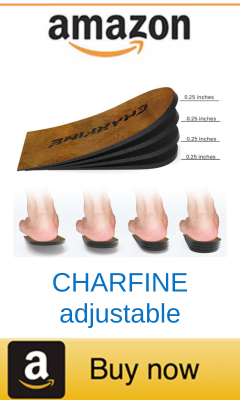
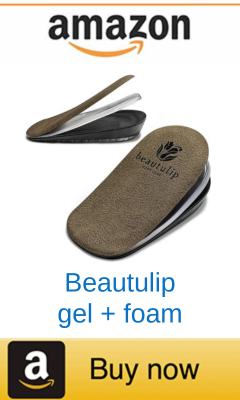
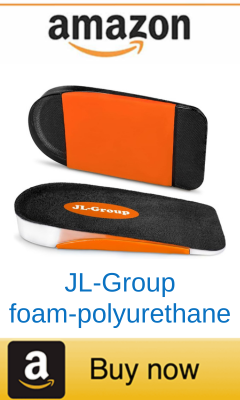
Heel lift inserts:
These lift the heel and often come in sets that allow you to adjust the height to exactly what's needed to reduce your child's pain – this adjustability is also really handy when weaning your child off the heel lifts later on during rehab.
The amount of cushioning depends on the brand, but combining firmer ones with cushioned shoes (like running shoes) can provide enough cushioning regardless.
They don't provide any stability or arch support – so if your child over-pronates, these might not be the best option.
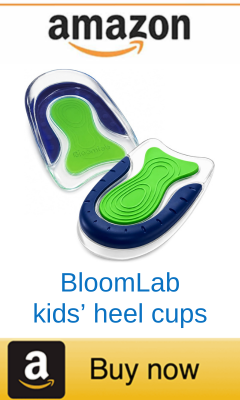
Heel cups:
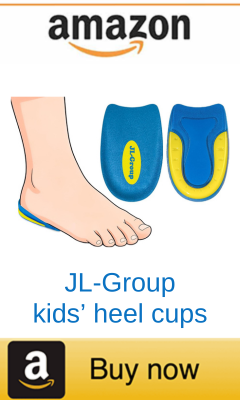
These also lift the heel but have a set height. However, the amount of lift is usually enough for most kids – especially when combined with shoes that have a built-in heel lift (in runnings shoes, this is called “heel-to-toe drop”).
They provide good cushioning for the heel.
They don't provide arch support, so they're not the answer if your child over-pronates.
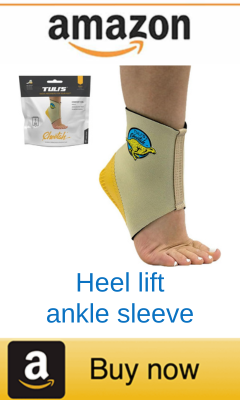
If your child does a sport that requires them to be barefoot (like gymnastics), these ankle sleeves with their built-in heel lifts might be useful – wear them on both feet to keep things even:
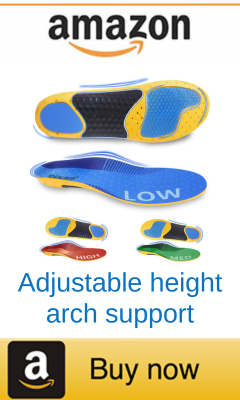
Arch support shoe inserts
What's great about these insoles is that many of them tick the boxes for all three things we're looking for:
Built-in heel lift – but you can place extra heel lifts underneath them or combine them with shoes that have a higher heel-to-toe drop if their own lift isn't enough.
Cushioning for the heel
Arch support that reduces pronation (if this is an issue for your child).
There is some debate among researchers whether off-the-shelf shoe insoles work as well as custom-made ones. However, the research on this topic is really sparse and not of good enough quality to draw solid conclusions in favour of either option.
💡 An important thing to keep in mind when looking at off-the-shelf insoles is that they're meant to support your child's natural foot shape.
For example, if your child has a low arch, their insole should also have a low arch. If they use one with a too-high arch, it can cause their foot to roll too far outward (this is called supination) as they run and walk – and that can lead to other injuries.
This is why it's important to get advice from a professional (a physiotherapist or podiatrist).
👉 But here's one rule that has stood the test of time in the research – for shoes as well as insoles for all types of injuries: If it feels uncomfortable to wear, then it's likely not right for your child and needs adjusting.
If you're in doubt, we'd suggest opting for a lower-arched insole.
When and how to use the inserts
Always place shoe inserts in both shoes to keep things even.
It should immediately feel more comfortable for your child to walk or play sports when wearing their shoes with inserts than without. This doesn't mean they should have no pain, but the inserts should at least reduce their pain during and after an activity.
However, insoles aren't a magic wand – you'll still have to adapt their sports activities and do rehab exercises to allow recovery.
💡 If the insoles increase your child's symptoms or create new ones, they're not right and should be adapted or discarded.
Initially, when your child's heel is very painful, it can be useful to wear the inserts (combined with good shoes) whenever they're spending time on their feet – for example, going to school, during sport, when playing outside, or just walking around. As their injury settles and recovers, this can then be reduced gradually.

Heel lift inserts and heel cups are temporary measures and can be discarded once the pain settles and their rehab has progressed to a point where stretching the calf and Achilles tendon no longer causes trouble. Their physiotherapist is usually best placed to advise on when this is.
Arch support inserts might be a more permanent solution, but that will depend on whether the reason for over-pronation in your child can be effectively addressed through exercises, or whether it's down to genetic reasons (e.g. naturally lax ligaments) – in which case the arch support might be needed long-term.
How we can help
Need help with a Sever's or Achilles-related injury? You’re welcome to consult one of the team at TMA online via video call for an assessment of your injury and a tailored treatment plan.

We're all UK Chartered Physiotherapists with Master’s Degrees related to Sports & Exercise Medicine or at least 10 years' experience in the field. All of us have a wealth of experience working with athletes across a broad variety of sports and ranging from recreationally active people to professional athletes. You can meet the team here.


About the Author
Maryke Louw is a chartered physiotherapist with more than 20 years' experience and a Master’s Degree in Sports Injury Management. Follow her on LinkedIn and ResearchGate.


