Partial Achilles tendon tears – Treatment, recovery time, and when you might need surgery

Updated: Aug 18
Wondering how to treat a partial Achilles tendon tear and how long it will take to recover? This guide walks you through everything you need to know – from how the tendon heals and what your rehab should look like, to the vital role of inflammation and scar tissue in this process and when surgery might be on the table.
Remember, if you need help with an Achilles injury, you're welcome to consult one of our team via video call.

In this article:
This article contains affiliate links. We might earn a small commission on sales at no extra cost to you.
We've also made a video about this:
Before we start: If you’re not sure whether you have a partial Achilles tear, you can find more information about the typical partial Achilles tear symptoms and how to test for it here.
Does a partial Achilles tear need surgery?
Sometimes – but most cases can be treated successfully without it, using the kind of rehab plan we describe below.
Researchers haven't yet reached a clear consensus on exactly who needs surgery, but it's more likely to be considered if:
the tear is very large (more than 50% of the tendon is torn)
the tear is at the upper end of the tendon, where the calf muscles meet the Achilles (known as the proximal myotendinous junction – essentially the top of the tendon)
you've followed a good rehab plan, and things aren't improving as expected.
That said, your overall health and the level of activity you want to return to will also play a role in the decision.
How do partial Achilles tears heal?
One of the first things that happens after sustaining a partial Achilles tear is inflammation – this usually kicks in within a few hours and peaks over the next two to three days, provided you don't do anything to irritate the injury further.
This inflammation is actually a good thing. It's the first stage of healing, and it's an important one – it's how your body clears away the damaged cells. As the inflammation begins to settle, your body sends a fresh blood supply to the area, along with all the cells needed to start repairing the torn tissue.
At the same time, scar tissue begins to form. Scar tissue gets bad press online, but it's genuinely essential – torn tendons have to form scar tissue in order to heal.
💡 Whether that scar tissue is useful (we call it functional scar tissue) or becomes problematic depends largely on how the injury is managed.
In a partially torn Achilles, the initial scar tissue is made up mainly of Type 3 collagen fibres – a softer, less robust type of collagen than what a healthy tendon is normally made of.
These fibres also tend to be disorganised at first, going in all directions rather than being neatly aligned. What makes healthy tendons so strong is that their collagen fibres run in parallel, along the length of the tendon – in the direction the tendon takes the most strain when it works.

The good news is that with the right treatment, these fibres can be replaced with stronger ones, properly aligned. This happens through the correct combination of rest and progressive loading exercises – we'll explain exactly what that means below.
In practice, these healing stages overlap. Scar tissue starts forming while inflammation is still doing its job, and the strengthening and realigning of collagen fibres begins while the scar is still taking shape.
Scar tissue only tends to cause problems if:
it becomes excessive – which can happen if the injury isn't given enough time to settle (for example, if you try to train through it)
it attaches to nearby structures that should be able to slide freely past it – again, this is more likely with excessive loading
the collagen fibres are never replaced with stronger, better-aligned ones – this can happen when someone over-protects the area and never completes a progressive loading programme, which is what stimulates the scar to mature and strengthen
sometimes, it’s just bad luck and becomes problematic despite the patient doing everything right.
👉 This is exactly why getting the balance between rest and exercise right is so important.

How long does recovery take?
It's worth understanding the difference between two aspects of recovery:
How long it takes for the tear to look healed on a scan (i.e. knitted back together).
How long it takes for the collagen to strengthen, align properly, and form a truly functional scar.
Unfortunately, a scan can't tell you how strong the scar is – only what it looks like.
Animal studies suggest that the initial knitting-back-together process can start within hours of injury and is usually complete by around 12 weeks, with smaller tears finishing this stage a little sooner.
But that doesn't mean your tendon has regained its previous strength at 12 weeks – that process can take several more weeks to months, and there's no fixed timeline.
💡 The best indicator of tendon strength is what your tendon can actually do, both day-to-day and during your rehab. We'll explain how to track this below.
Recovery time varies quite a bit from person to person. The main factors that influence it are:
The size of the tear – larger tears take longer.
How well your rehab is structured – getting the rest-to-exercise ratio right makes a significant difference.
Your general health – hormone imbalances can slow healing; for example, diabetes can affect tendon health, and collagen production naturally slows down a little during perimenopause.
Whether you had Achilles tendinopathy (and overuse tendon injury) before the tear – if your tendon was already injured, it may take longer to build back to the strength needed for your target activity level.
Treatment plan components
It helps to think of your rehab as a pyramid:
At the top is your goal – whether that's running a half marathon, playing weekend tennis, or simply being able to walk the dog comfortably.
At the bottom is your starting point – what your tendon needs right now to settle and begin healing.
Everything in between is the gradual process of building strength and function, step by step.

Every patient's plan will look different, because it needs to be tailored to:
your symptoms and the severity of the tear
how your tendon responds to treatment
your current ability and fitness level
what you want to get back to doing
your day-to-day commitments and lifestyle.
How to effectively protect your tendon
Foot position
To give the torn Achilles tendon the best chance of healing, you need to reduce the tension through it – and the way to do that is to raise your heel so that your toes are lower than your heel. This brings the edges of the torn area slightly closer together, which helps them knit.
Small partial tears don't need much of a lift. Regular running shoes with a standard heel-to-toe drop (around 10 mm) are often enough. (Most Asics running shoe models have a decent heel-to-toe drop.)

Slightly larger tears may need one or two heel-lifting wedges added inside your shoes – put one in each shoe to keep things balanced.
Large partial tears may require an orthopaedic boot for a few weeks, with heel wedges inside so that the foot is positioned with the toes pointing slightly downward. Very large tears (more than 50% of the tendon) may be managed similarly to how a complete rupture is treated without surgery.
Here are examples of various types of heel insert available on Amazon:
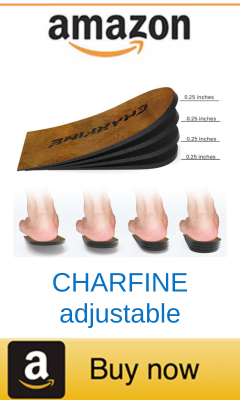



💡 Use the least amount of heel lift that allows you to walk slowly without discomfort. As your symptoms settle and your rehab progresses, the wedges can be gradually reduced until you're comfortable walking barefoot again.
Relative rest
The good news is that complete rest is rarely needed – and rarely helpful. Research on tendon healing is clear that early, protected movement at the right intensity leads to better outcomes than extended rest.
💡 The aim is to reduce your activity levels – standing, walking, running, general exercise – to a volume that doesn't provoke your symptoms.
If you have a small tear, you might only need to take things easy for a day or two before finding that you can manage quite a lot of walking, and sometimes even light running, as long as you're wearing the right footwear and heel wedges.
Exercises like squats and deadlifts might still be possible, as long as your heels are lifted.

The key is to monitor your symptoms carefully. If your tendon feels painful during or after activity, you're likely doing too much. It's often worth taking things slowly in the first few weeks and focusing primarily on your rehab exercises – this helps you get a clear picture of what your tendon can currently tolerate.
If you are in an orthopaedic boot, you won't be able to exercise that leg much to start with – but you can still do core work and exercises for the rest of your body. We always aim to keep our patients as active as possible throughout their recovery, as this helps preserve fitness and shorten overall recovery time.

Managing swelling
Swelling is mainly a concern with larger tears. Some swelling is completely normal after a tendon injury – but excessive swelling can interfere with healing.
A good way to gauge whether your swelling is under control: Look at your ankle and tendon area first thing in the morning – this is generally when it will look its best. Some increase in swelling through the day is fine and expected, but by the evening it shouldn't look as if it is swollen to the max.
The main reasons for excessive swelling are:
Doing too much – overloading the injured area causes more fluid to be produced.
Sitting still for long periods with your feet down – reduced circulation, combined with gravity, causes fluid to pool in the feet and ankles.
The solutions are fairly straightforward. Your physio can help you find the right activity level for your specific situation. Keeping your foot elevated on a chair while working at a desk helps, as does taking regular movement breaks. If you work from home, putting your feet up during lunch can make a real difference.
Applying ice for short periods – no more than 10 minutes at a time – can help with swelling and discomfort. Keeping your tendon on an ice pack for extended periods, however, isn't useful and might actually be counterproductive.

Medication
It's best to avoid anti-inflammatory medication (like ibuprofen) in the first few days after a tear, as it can interfere with the early stages of healing if it suppresses the inflammation too strongly.
That said, excessive inflammation isn't helpful either, and in some cases your doctor might decide that anti-inflammatories are appropriate – so always follow their guidance.
If you're struggling with pain in the early days, ice is generally a better option. While ice does have some effect on inflammation, keeping applications to 10 minutes or less means any impact on the inflammatory process will be minimal and short-lived, and won't interfere with healing.
Restoring tendon strength and endurance
As we mentioned earlier, the new collagen that forms as part of early scar tissue isn't yet as strong or as well-organised as in a healthy tendon. To stimulate the body to produce stronger, better-aligned collagen fibres, you need to progressively load the tendon in ways that mimic how it works in real life.
💡 Restoring tendon strength isn't just about doing specific Achilles exercises – it's about the total load your tendon handles across an entire day and week, including all your daily activities. That total load needs to match your tendon's current capacity. Push too far beyond it, and you risk slowing your recovery down.
Step 1 – Find your starting point
The key question to answer is: How much walking, standing, and exercise can my tendon currently handle without reacting badly?
This will be while using whatever support is appropriate for your tear – for example, your heel-lifted shoes or an orthopaedic boot.
👉 Here are the baselines you'll want to establish:
How long you can spend on your feet doing everyday activities (walking, standing, stairs) without symptoms flaring up?
What general exercise you can still do? Cycling and swimming are often good options in the early stages.
Which specific Achilles exercises you can start with? This can range from gentle, non-weight-bearing movements (for larger tears) to standing calf raises (for smaller tears).
Whether you need to keep your heel raised during exercises. If you're in heeled shoes with inserts, you'll start your exercises in them too (e.g. calf raises with your heel elevated).
💡 Getting this starting point right is crucial. It gives the injury a chance to settle, allows the tendon to begin knitting back together, and provides just the right level of movement and load to support the healing process in those early days.
Step 2 – Gradual loading
Once you have a stable starting point, the next phase is gradually increasing the load on the tendon as it heals and strengthens. This might involve:
walking progressively longer distances and at increasing speed
moving from flat surfaces to gentle inclines
progressing from double-leg to single-leg calf raises, and eventually adding weight
gradually reducing the heel lift in your exercises – for example, moving from calf raises in heeled shoes to flat shoes to eventually doing them over the edge of a step
adding hopping and jumping exercises in the later stages, depending on your sport
gradually easing back into sport-specific training.
There are many variables involved, and no single programme works for everyone. The right progression depends on you – your starting fitness and strength, how your tendon responds at each stage, and what you're ultimately working towards. This is why a physio assessment can be so valuable.


Injections
Several types of injection are thought to potentially support healing, though the evidence is still fairly limited overall.
PRP (platelet-rich plasma) injections – prepared by spinning a sample of your blood to concentrate the platelets – have been researched more than other options.
However, there are currently no high-quality studies looking specifically at whether PRP improves recovery from partial Achilles tears compared to standard rehab. Research on complete ruptures does suggest there may be some benefit, but we're not yet able to say this with confidence for partial tears.
💡 PRP isn't something we routinely recommend, but if your injury isn't progressing as it should despite good rehab, it's worth considering before surgery becomes a conversation.
Stem cell injections – there is currently no evidence that these help with any type of Achilles injury in humans.
Corticosteroid injections – the general consensus in the research is that these should be avoided, as they can actually interfere with tendon healing.
How we can help
Need help with your Achilles or related injury? You’re welcome to consult one of the team at TMA online via video call for an assessment of your injury and a tailored treatment plan.

We're all UK Chartered Physiotherapists with Master’s Degrees related to Sports & Exercise Medicine or at least 10 years' experience in the field. All of us have a wealth of experience working with athletes across a broad variety of sports and ranging from recreationally active people to professional athletes. You can meet the team here.


About the Author
Maryke Louw is a chartered physiotherapist with more than 20 years' experience and a Master’s Degree in Sports Injury Management. Follow her on LinkedIn and ResearchGate.